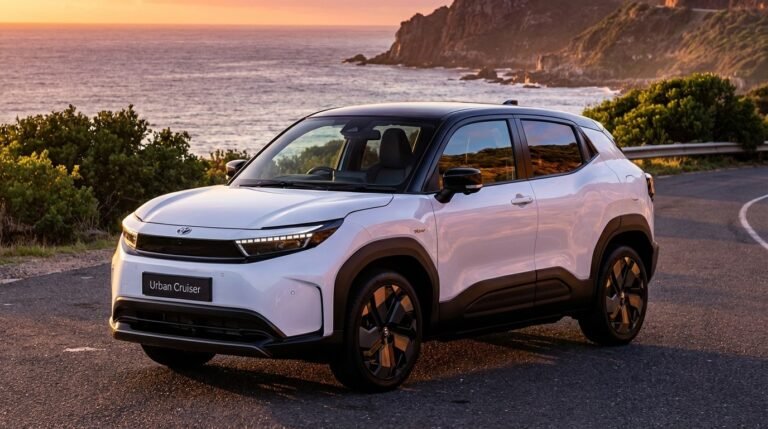
The year 2025 has been monumental for Tata Motors. We just witnessed the launch of the Tata Sierra ICE (Internal Combustion Engine) in November, bringing back one of India’s most iconic nameplates. But for the green mobility enthusiasts at GreenVehic, the real excitement lies in what comes next: the Tata Sierra EV.
Scheduled for an early 2026 debut, the Sierra EV isn’t just another electric car; it is Tata’s attempt to create a new “Lifestyle Electric” segment. Sitting comfortably between the stylish Curvv EV and the muscular Harrier EV, the Sierra EV promises the practicality of a family SUV with the soul of an off-roader.
Here is everything we know about the Tata Sierra EV, from its confirmed interior tech to its expected real-world range.
Design: The “Alpine” Identity Returns
The Sierra EV retains the boxy, upright stance that made the original 1991 model a legend. Unlike the curvaceous Curvv EV, the Sierra is unapologetically square, maximizing interior space.
- The Glasshouse Effect: The signature curved rear windows (Alpine windows) are present, though modernized. They are now part of a larger glass roof structure that floods the cabin with light, creating an airy, open feel.
- EV Distinctiveness: Expect a “blanked-off” grille with an end-to-end LED light bar (Connected DRLs) that features dynamic charging animations.
- Wheels: Massive 19-inch aero-alloy wheels designed to reduce drag while maintaining a rugged look.
Interior: A Tech-Heavy Lounge
If you thought the Nexon EV or Curvv EV interiors were modern, the Sierra EV takes it a step further. Based on the recently revealed ICE version, the EV cabin will be a major selling point.
The Triple-Screen Dashboard
The Sierra EV creates a digital cockpit experience with three distinct screens:
- 10.25-inch Digital Instrument Cluster: For driver metrics and navigation.
- 14.6-inch Central Infotainment: The main hub for Harman/JBL audio and vehicle settings.
- 12.3-inch Passenger Display: A dedicated screen for the co-passenger to stream media, similar to high-end luxury EVs.
Lounge Mode Seating
The rear seats are where the Sierra EV shines. Tata has introduced a “Lounge” concept with sliding rear seats that offer limousine-like legroom. The rear bench is contoured for two adults rather than three, prioritizing comfort over capacity, though a 5-seater configuration will be standard.
Performance: Built on Acti.ev
The Sierra EV utilizes Tata’s Acti.ev architecture (Advanced Connected Tech-Intelligent Electric Vehicle), a dedicated pure-EV platform. This allows for a flat floor, a “frunk” (front trunk), and better battery density.
Expected Specifications
| Feature | Estimated Spec |
| Battery Pack | 55 kWh (Mid Range) / 65 kWh (Long Range) |
| Claimed Range (MIDC) | 450 km – 550+ km |
| Real-World Range | 350 km – 420 km |
| Motor Setup | FWD (Standard) / Dual-Motor AWD (Top Variant) |
| 0-100 km/h | < 8.5 seconds |
| Suspension | Independent Multi-link (Rear) for AWD trims |
GreenVehic Note: The Sierra EV is expected to be one of the few EVs in its segment to offer AWD (All-Wheel Drive), making it a genuine option for adventure lovers who want to go off-road silently.
Charging & V2L Capabilities
As a 2026 model, the Sierra EV will support faster charging protocols.
- DC Fast Charging: Up to 150 kW support (10-80% in approx. 35 mins).
- V2L (Vehicle to Load): Power your camping gear, laptop, or coffee machine directly from the car.
- V2V (Vehicle to Vehicle): Ability to charge another stranded EV.
Comparison: Where Does It Fit?
With the Tata EV lineup getting crowded, confusion is natural. Here is how the Sierra EV stacks up against its siblings:
| Feature | Tata Curvv EV | Tata Sierra EV | Tata Harrier EV |
| Body Style | SUV-Coupe | Boxy Lifestyle SUV | Performance SUV |
| Focus | Style & Aerodynamics | Space & Comfort | Power & Presence |
| Rear Seat | Standard | Lounge / Sliding | Standard Spacious |
| Battery (Max) | 55 kWh | 65 kWh (Est.) | 60-80 kWh (Est.) |
| AWD Option | No | Yes (Expected) | Yes |
| Est. Price | ₹17.5L – ₹22L | ₹20L – ₹25L | ₹22L – ₹30L |
Verdict: Choose the Curvv for city style. Choose the Harrier for highway dominance. Choose the Sierra if you want a balance of luxury, space, and mild off-road capability.
4. BUYING ADVICE
Who Should Wait for the Sierra EV?
- Nostalgia Seekers: If you grew up admiring the original Sierra.
- Chauffeur Driven Owners: The rear “Lounge” seats will offer best-in-class comfort.
- Adventure Enthusiasts: If you want an EV that can handle rough trails (AWD) without the bulk of the Harrier.
Who Should Look Elsewhere?
- Strict Budget Buyers: The Curvv EV or Nexon EV Long Range offers 80% of the utility for ₹3-5 Lakhs less.
- City-Only Users: The boxy shape might be slightly harder to park in tight spots compared to the sleeker Curvv.
FAQs
Q1: When is the Tata Sierra EV launching in India?
The Tata Sierra EV is expected to launch in January or February 2026, likely following a showcase at the Auto Expo or a standalone event.
Q2: What will be the price of the Tata Sierra EV?
We estimate the price to range between ₹20 Lakh and ₹25 Lakh (ex-showroom), positioning it above the Curvv EV but below the Harrier EV.
Q3: Does the Tata Sierra EV have a sunroof?
Yes, it features a large panoramic glass roof that integrates with the signature “Alpine” rear windows for a unique open-air experience.
Q4: Will the Sierra EV have 4×4 or AWD?
Yes, top-spec variants of the Sierra EV are expected to feature a Dual-Motor AWD setup, providing genuine off-road capability.
Q5: What is the real-world range of the Sierra EV?
With the expected 65 kWh battery pack, you can expect a real-world driving range of approximately 380 to 420 km on a mixed cycle.